-->

Saturday, March 06, 2010

Paris F/W 2010 so far

Balenciaga:
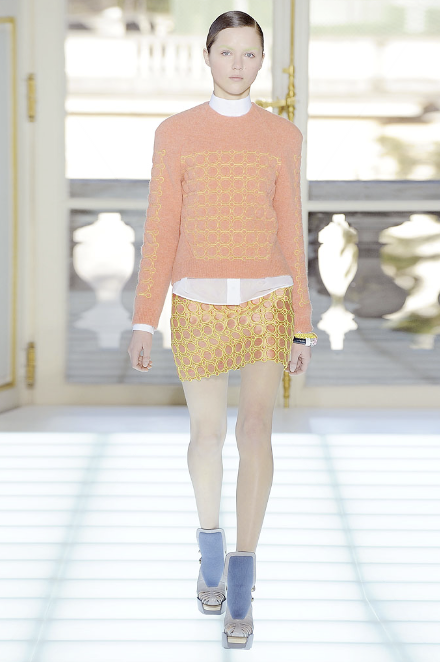
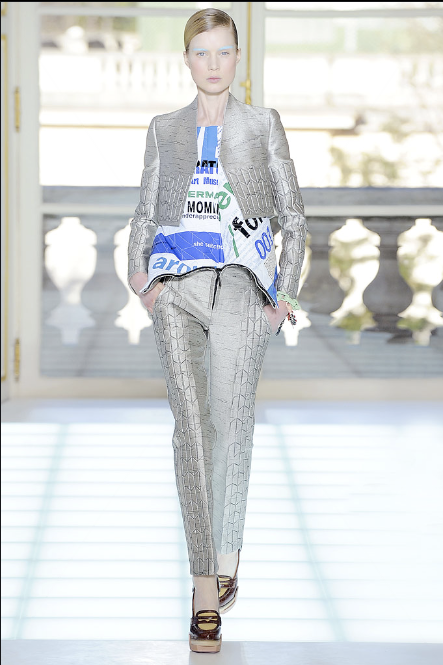
Nicholas Ghesquiere, if I ever met you in real life I would have to fist bump you for all of the geometric things you're doing with Balenciaga. I know it is hallmark Ghesquiere, looking forward in time and space to the point where it becomes beyond futuristic (since fashion is all about looking forward by six months, always), most designers outdo their signature (see: Ball Mane) and it starts to become a repetition of the past, but it never, ever happens with Nicholas' work for Balenciaga. The odd fabrics combined with the industrial cutouts of different shapes was clearly looking beyond six months (sixty years I would say) even though it was an extension of the spring collection; most noticeable in the spiderweb pattern on the knit sweater and a few of the geometric dresses. Also, I loved the sweaters with geometric neon squares printed on top of one another so precisely cinched by a belt at the waist - I don't know why but it reminded me of the Stargate sequence in 2001: A Space Odyssey, mainly because the prints seemed to begin falling into this vertical abyss; the same sense of vertical oblivion seen in the film. (Note: I don't care if you don't see the link because it's awesome and Stanley Kubrick and I are dating so back off k)
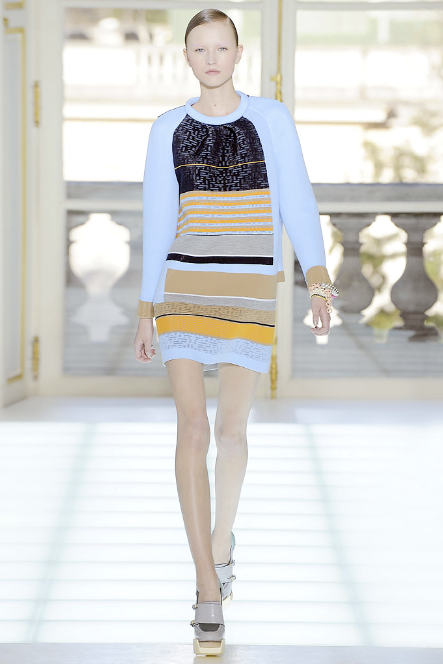
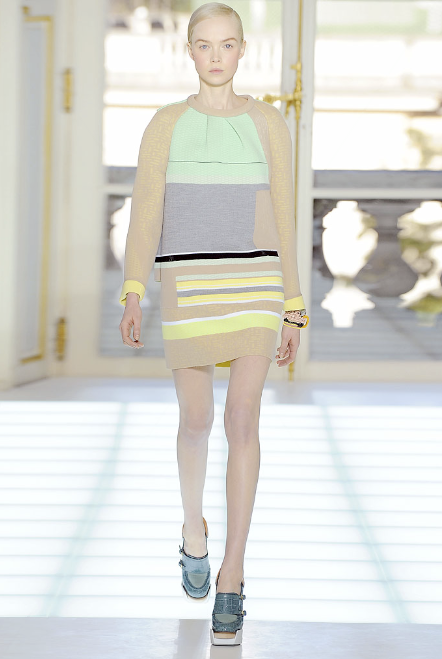
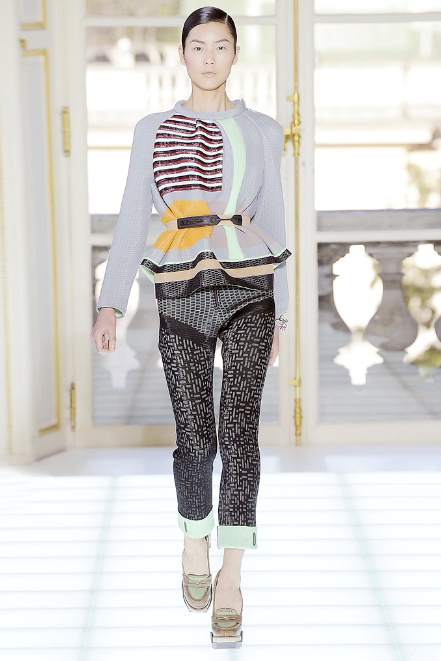
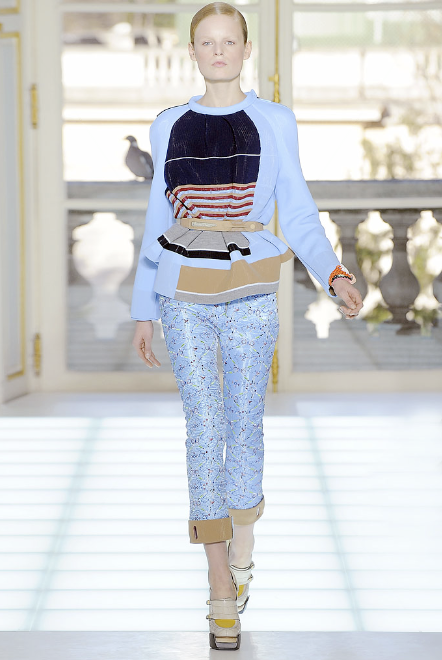
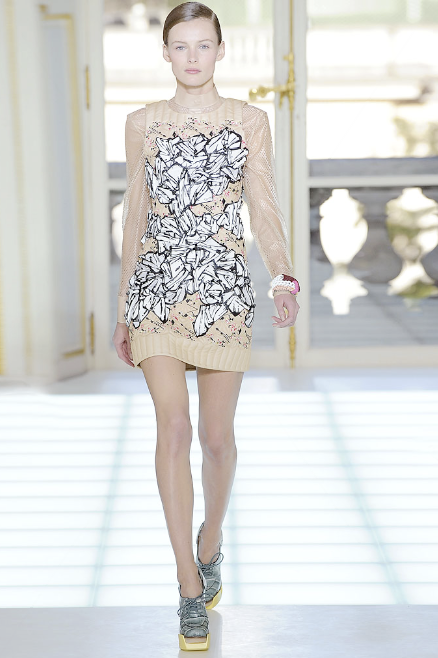
The latter of the collection was basically large cutouts of what seemed to be newspapers, but with the large eccentric prints and neon-colours used I felt it was, again, futuristic (Nicholas bb did you travel back to the early 21st century from the future? I won't tell promise). And although some of the concept was maintained and it was a neat idea, I didn't really like the latter of the collection. It was too much of a stray away visually, from the geometric BAM! to the neon word collage 'yeah okay I guess' feeling I got.
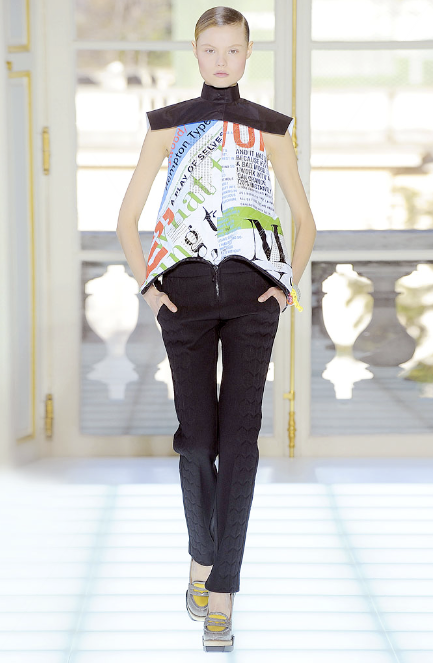
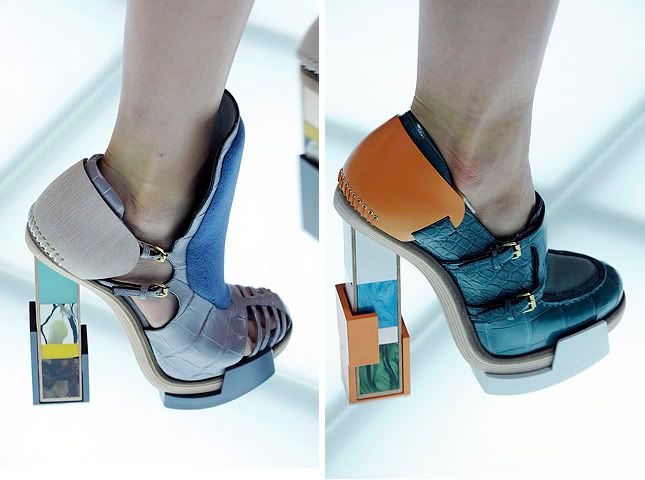
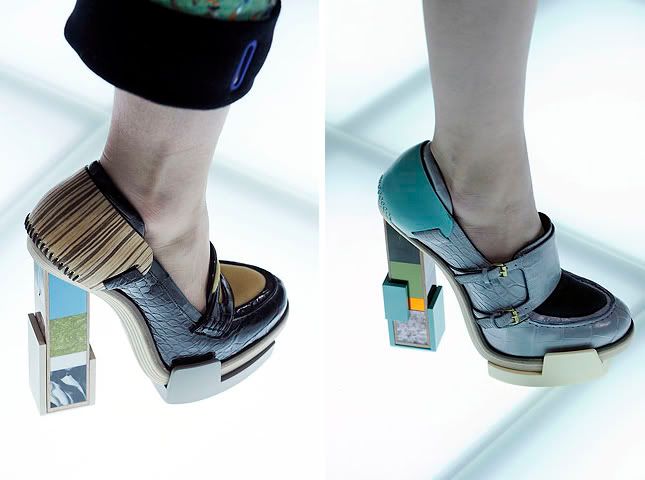
But the greatest thing ever was hands down THE SHOES. LOOK AT THEM. I honestly can't even begin to express how awesome these are. I guess I'll have to retract what I said about fist-bumping you and change that into a full blown hug-kiss combination. 


Manish Arora:
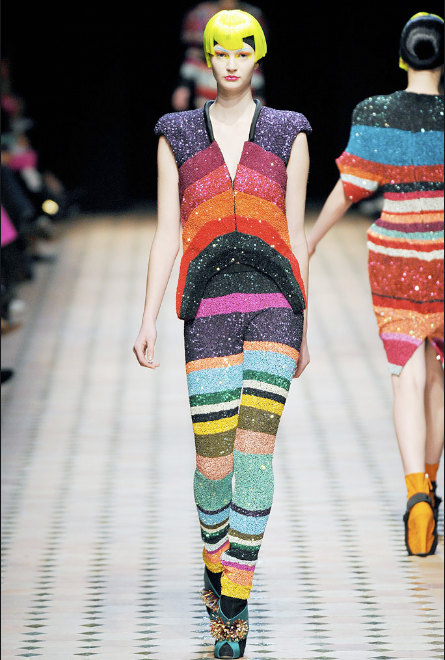
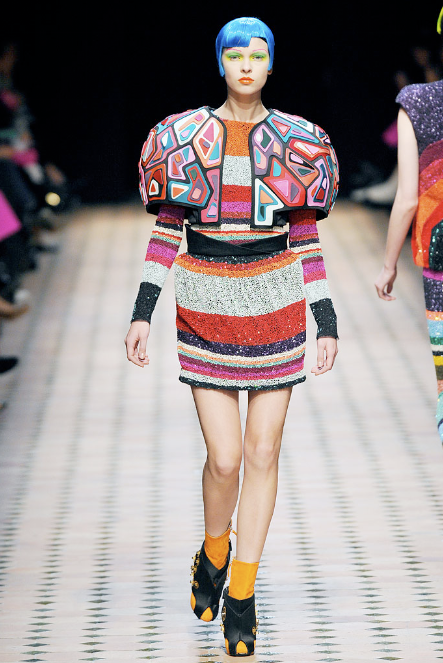
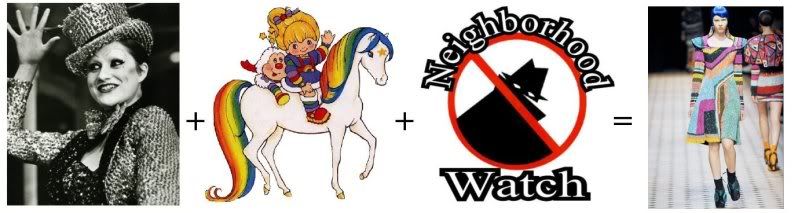
The colourful sequins! Oh my god I think I died when I saw these. It's like if Columbia from Rocky Horror Picture Show met Rainbow Brite and they designed an outfit together that they would wear whenever they kicked some ass. Overall though I think my love for this collection stayed within the realms of the beginning looks. The colours and patterns blended together so well that I want to break into a dance. Which I did. In figurative sequins and neon wigs.
Issey Miyake:
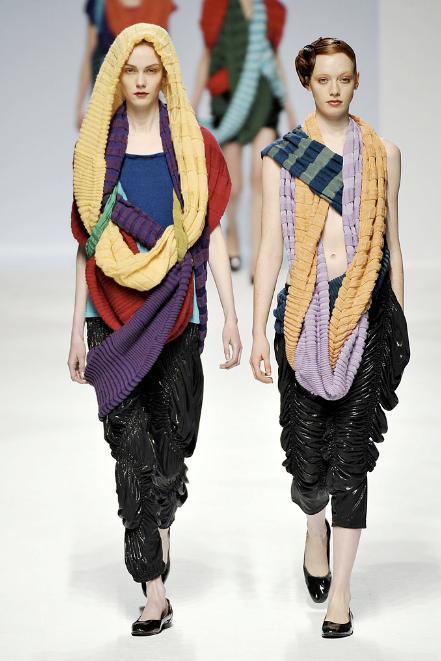
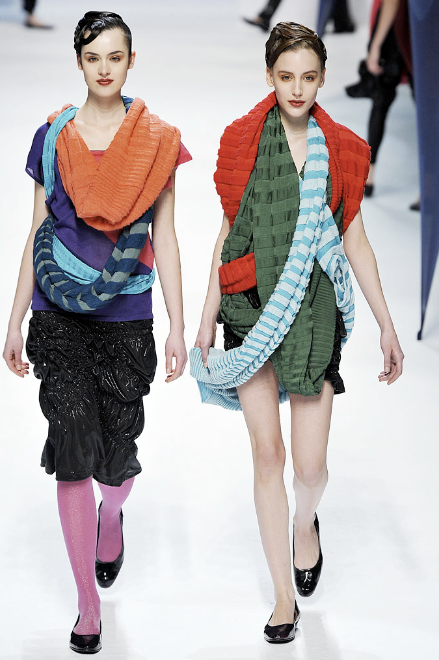
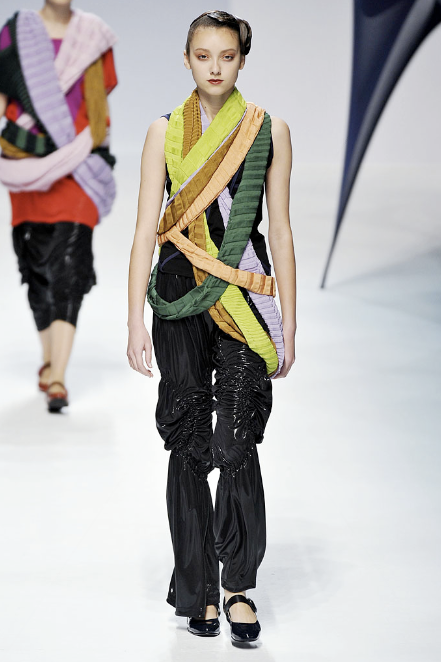
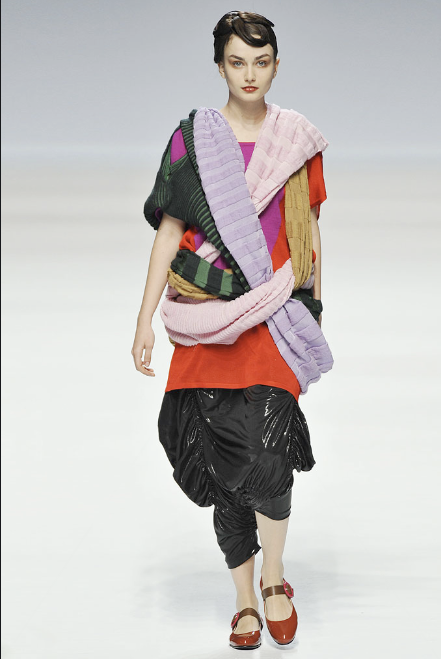
Although there were several looks I liked from the latter (well, pretty much the last 50 looks) of the collection, I loved what Dai Fujiwara did with the first six or seven looks - how he took geometric tube-like knits and intertwined/layered them within each other. In my opinion I felt he should have integrated them into the collection near the end, instead of bringing the viewer (aka me) such immediate joy which I kind of lost by the end. The colour palette also reminded me of his Flying Saucer collection. Also, S/S 95.  But the reminder was only there in colour, not in concept or aesthetic. I mean I like what Fujiwara is doing but in comparison to Issey? Not at alll.


Vivienne Westwood:
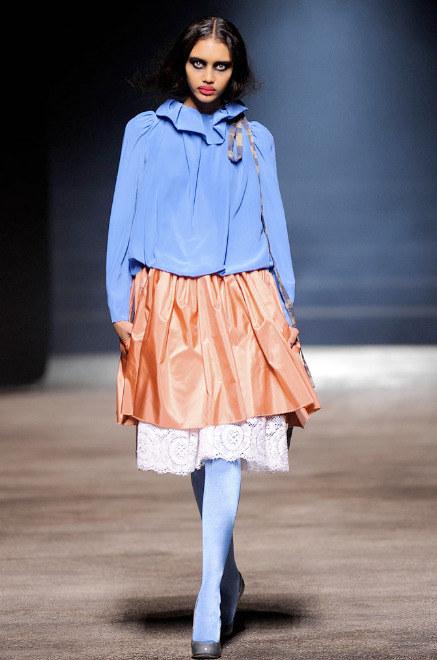
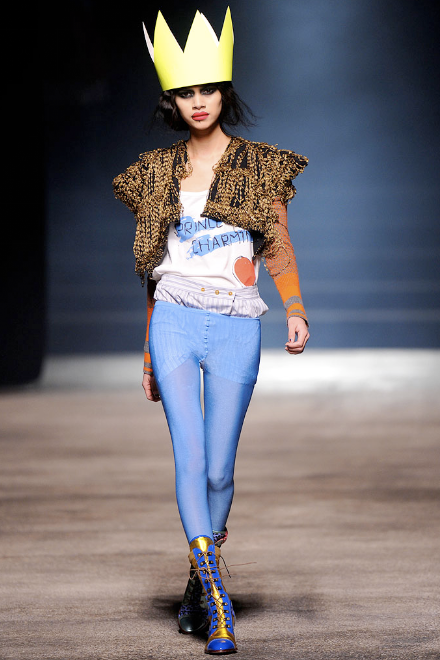
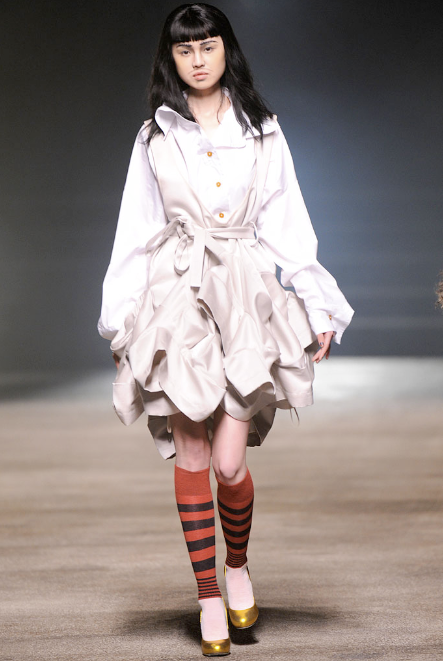
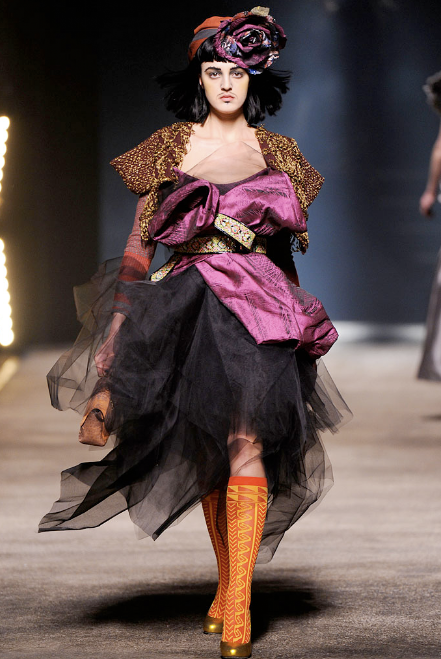
Vivienne will always be that designer who always combines clothing with a sense of radical patriotism. There's no denying that she integrates her British roots into each collection, some more obviously than others. But the thing about this is that it always, always works. It's a British rebellion, a radical outlook on things, sometimes punk, sometimes merely not conventional. This blunt influential outlook is Westwood's signature method and in F/W she maintains it through prints, text, styling, color palette, etc. (For some reason I thought the make-up got influence from imagining Galliano as a trans? Do other people see this or is it just because I'm writing this at 3:28am?) But I love loved the styling and how well the colours coincided and everything was just great. For some reason it reminds me of an avant-garde film I saw recently entitled Jubilee (probably because it revolves around Britain in the future). It was weird but pretty good and plus, Tilda Swinton is extremely fond of it and she's on par with Zeus so like that means it's definitely good.

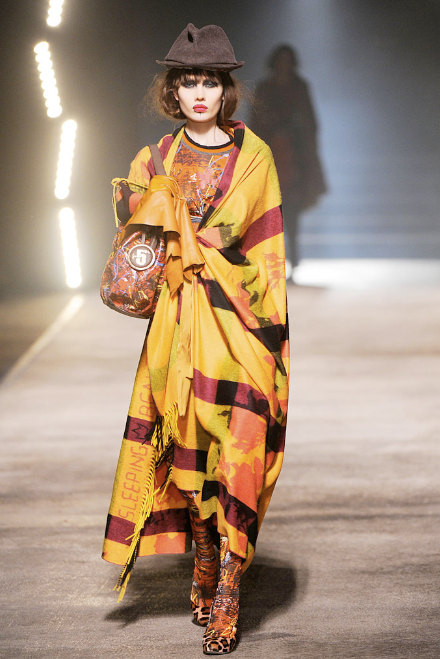
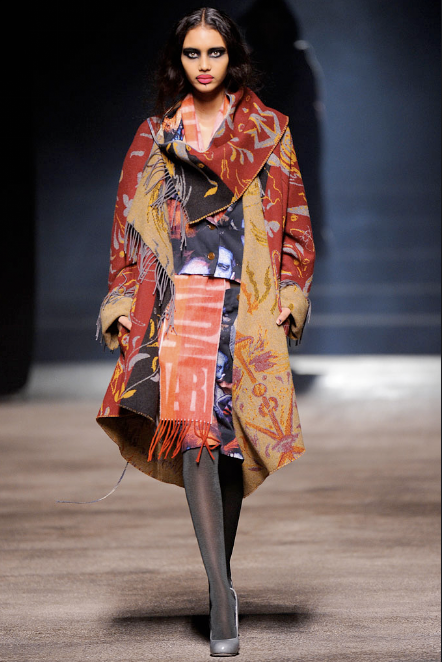
(all images via style.com)
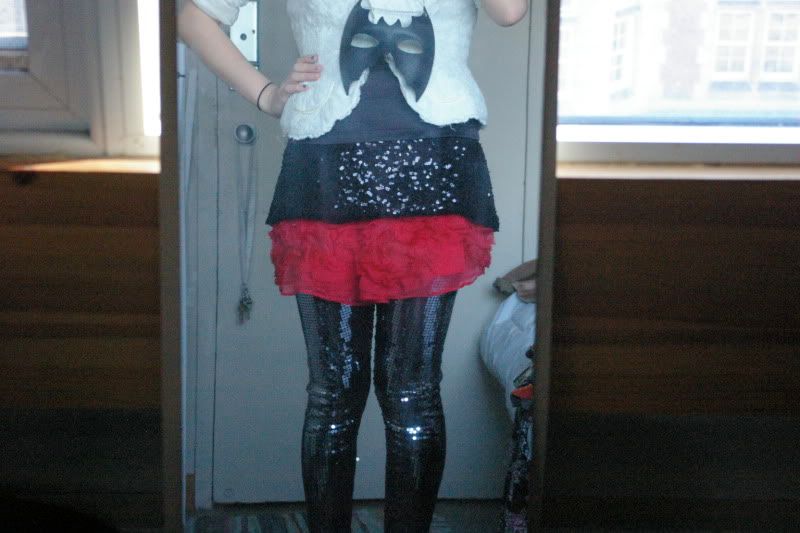
This post is nice and quick so I can separate it from the Paris-so-far post I'm about to put up. I wore this last night to see Alice in Wonderland (which was p. good). Also COMME and TAO today :3 So excited I can't even begin to describe.


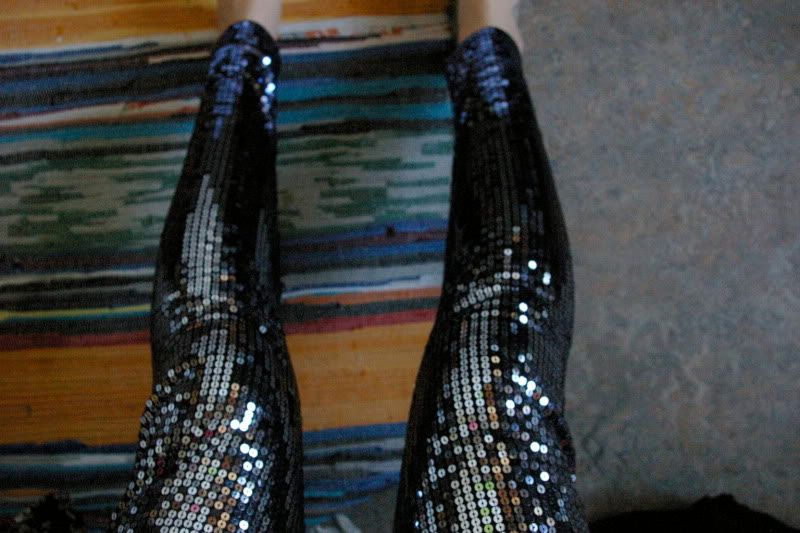
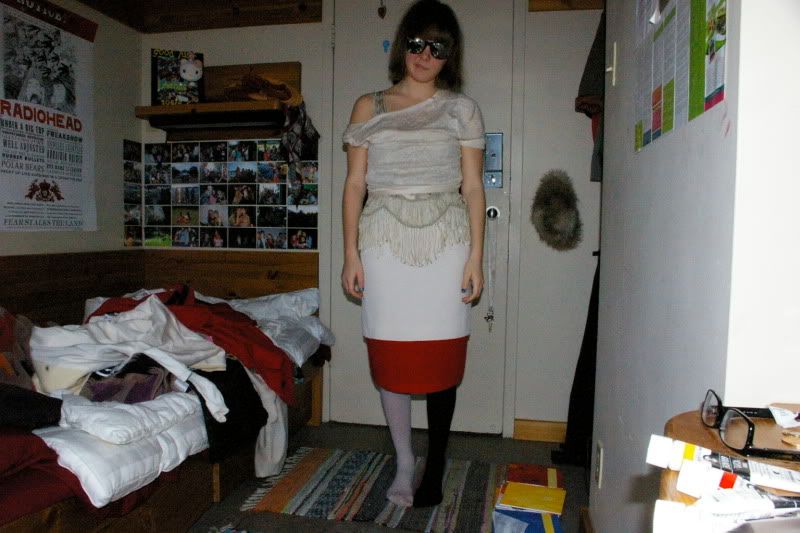
White lace blazer, vintage. All sequins from H&M. Red frilly dress, mother's closet. Black batman necklace, halloween mask on a chain.

Wednesday, March 03, 2010

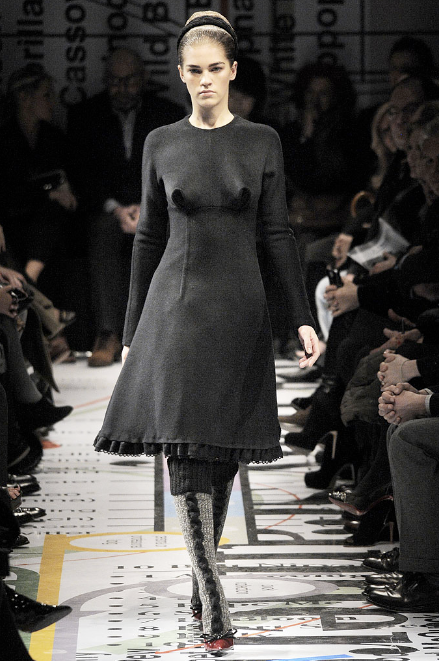
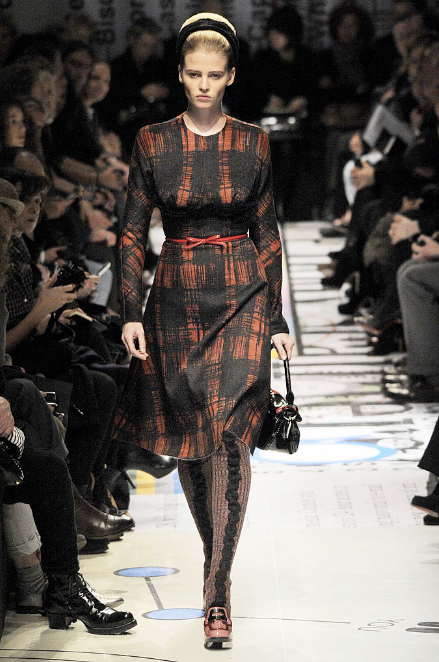
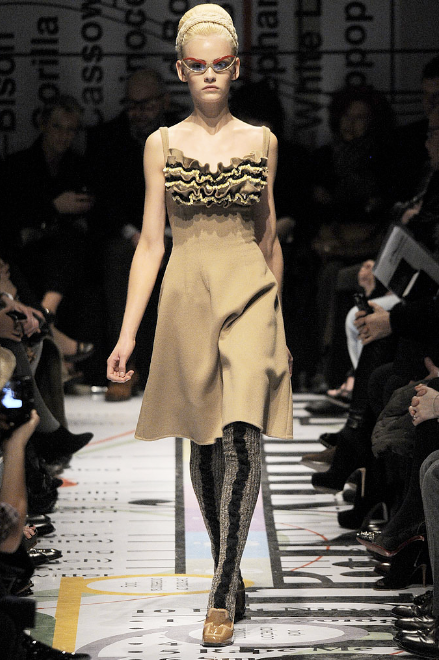
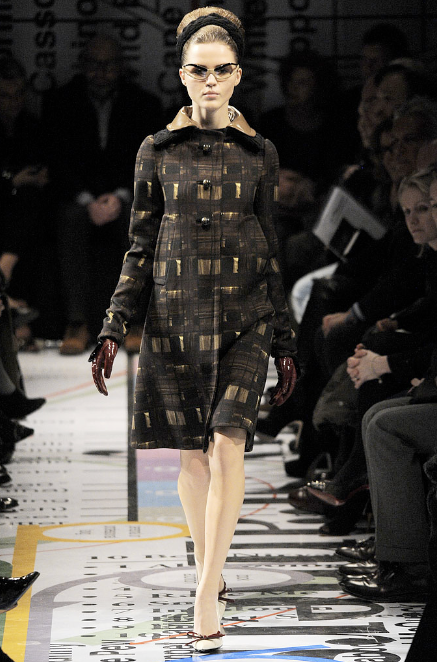
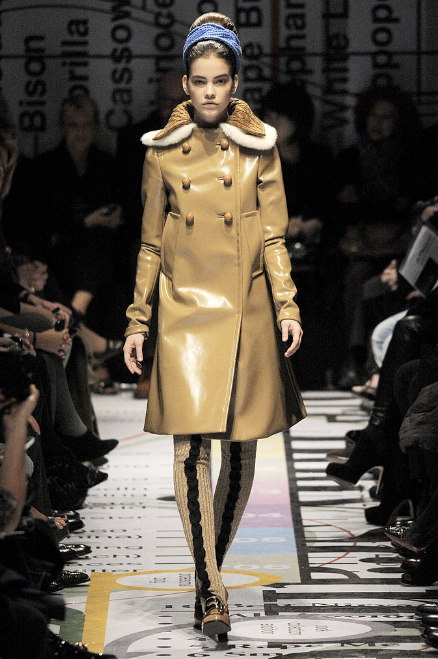
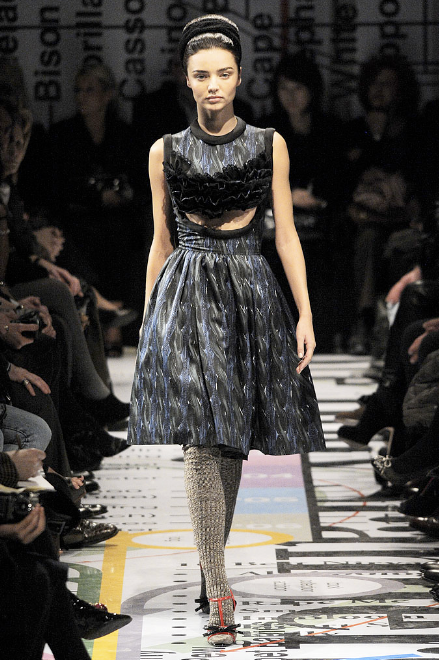
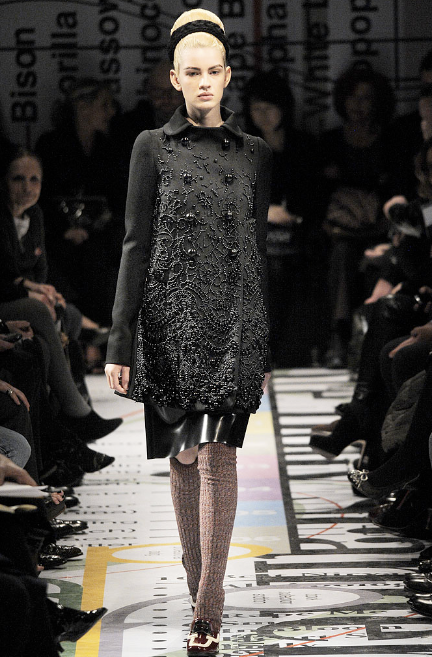
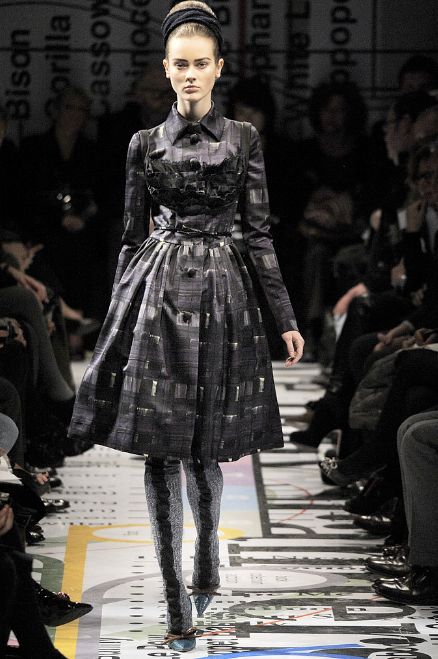
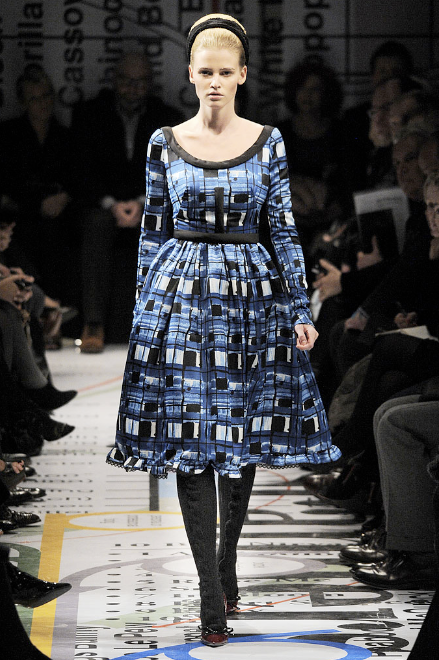
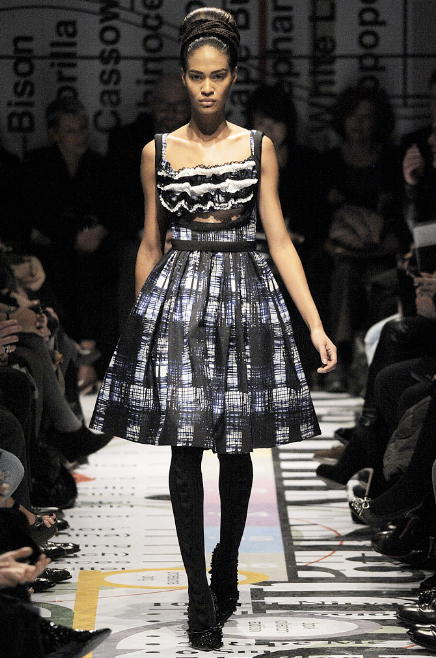
With the first few looks that had been sent out onto the runway for the Prada A/W 2010 collection, a vision of a scenario from the past came to my mind: a set of pleasant housewives making their way down stairs outside of their titanic home to their pristine vehicles, Lucky Strike in hand, determined to reach the cars before the cold began to bite their skin. In the 50s to 60s, when feminism (like many other controversial political topics) came to it's second crescendo, the modern housewife was almost a caricature of what a wife is; pristine, attentive, orderly, etc. These clothes capture that era of feminist indecision (think: Joan Allen's character in Pleasantville) but with a sultry touch, for as much as one seems to revisit past eras through reinvented designs, the influence of the twenty first century is almost inevitable. By this sense of influence I mean the flash of abdomen, patent leather, pointy bra formation, etc.


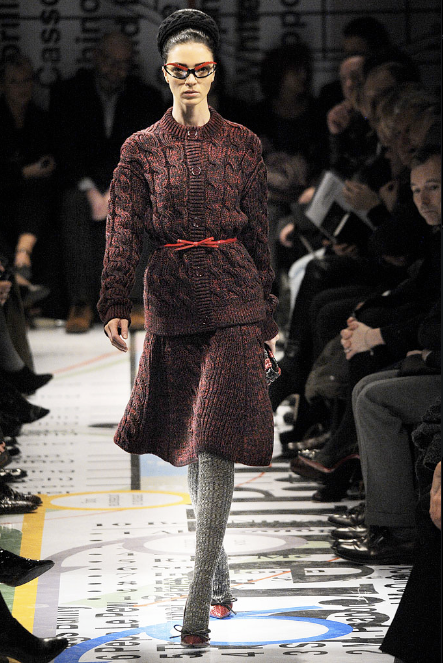
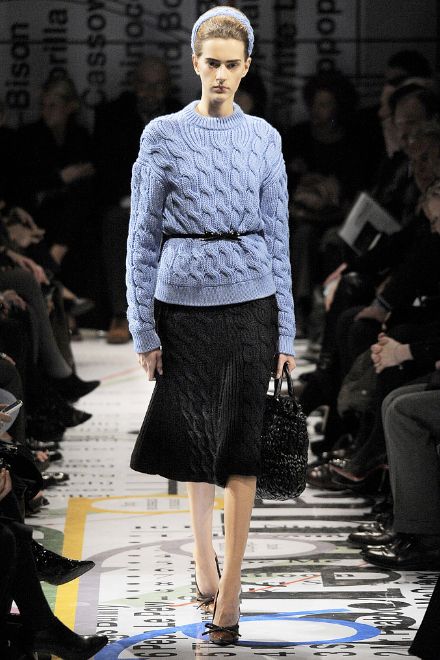
The clothes themselves definitely depicted the woman of that era, with wide, almost trapeze skirts and a cinched waist (a product of either small belts or tailoring) The coats of the same effect layered collar of knit over fur, with knit tights of beige neutrals adding to the sombre effect of housewives in the fall. The dresses (all of the pieces, actually) focused entirely on the female silhouette and bodily shape (something feminists typically objected against for sultry silhouette=sex) as a focus on breasts was through lace ruffles on most dresses or the exaggerated pointy bras on some of the coats, as breasts is one of the key pieces in creating the feminine shape of the woman.


Miuccia Prada also brought her somewhat signature knits to the table with skirt and sweater combinations cinched at the waist, as well as nearly all of the tights she pieced together with the dresses. The black coats and dresses emblazoned with pristine embroidery brought a sense of lavish regality to the collection so similar to the meager housewives, like puppies to men aka their husbands (Pleasantville again), juxtaposing the concept with aesthetic. I was very fond of the abstract grid prints, and that although they had somewhat of an artistic demeanor, they brought a sense of feminine simplicity to the clothing, and gave silhouette a bit of a bite.


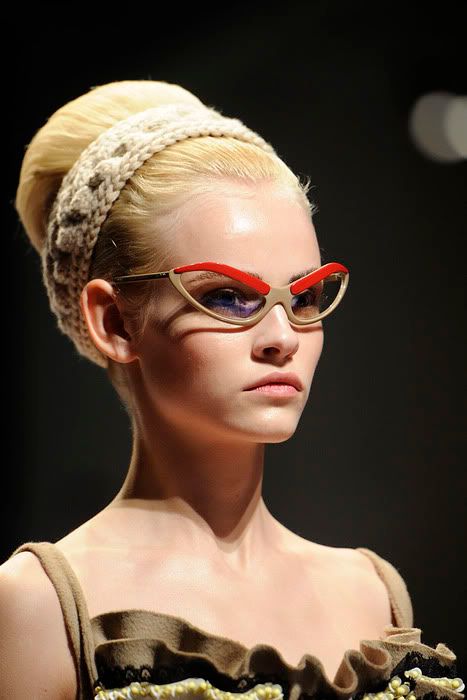
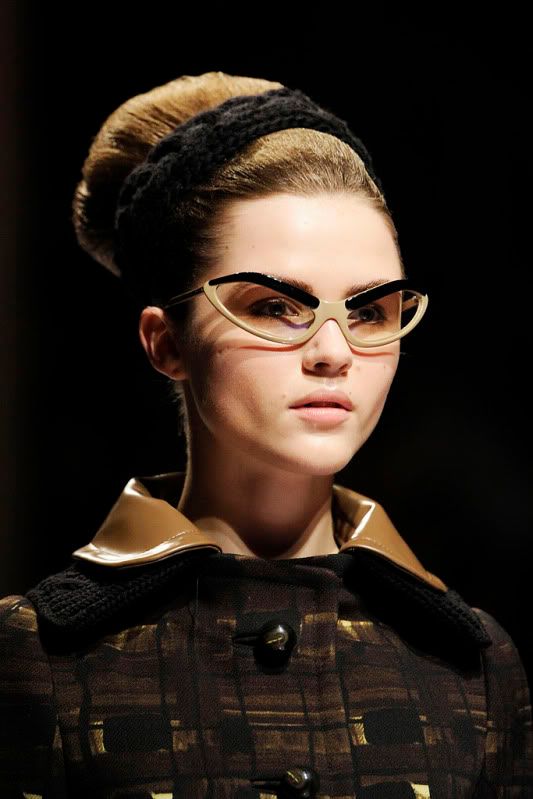
Again with reference to the 50s and 60s, Miuccia brought it particularly with beauty and accessories. For one, the lack of any make-up whatsoever and the tight, perfectly concocted up-dos brings me back to that era of the cliche stay-at-home wife. Also brought to my attention is similarities to Mad Men (although I've only seen a few episodes) and Pleasantville (the latter focuses more on 50s though so I'd say the first is more prevalent), that sort of fictionalized perfection of a meticulous housewife which exaggerates the notion of what they must be. Stepford Wives (not the Nicole Kidman one) comes to mind as well, but that concerns more notion than time era. The cat-eye glasses also took a twist with the addition of eyebrows, which adds irony and satire to the collection, and to be honest they remain a favourite piece of mine from A/W 2010.


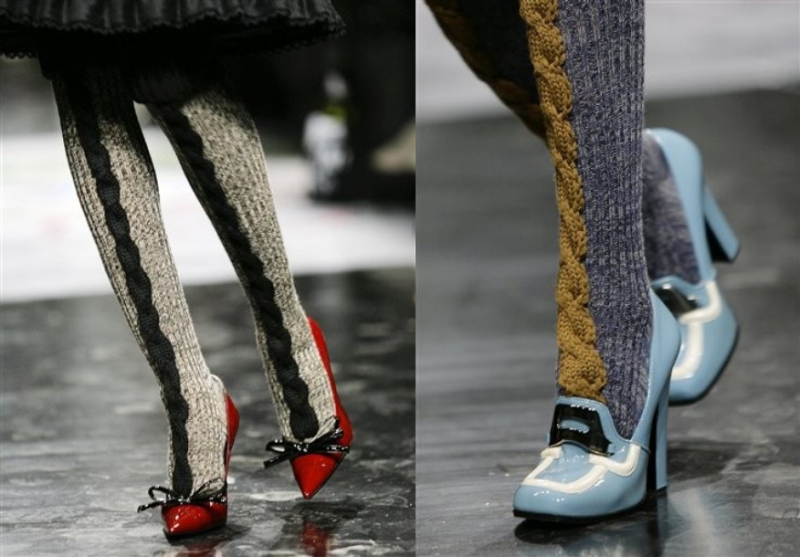
Also SHOES! As much as they fit into this cute, housewife grace again (and that's it's not particularly my cup of tea when it comes to shoe tastes) I particularly wouldn't mind owning a pair.


So what else can I say? I did very much like this collection because it brought back a classical set of clothes with tweedy knits and wide skirts and the rest. A commentary on the feminine role in the 50s/60s is apparent (if this is subconscious or conscious I'm not sure, because I haven't read any articles with her yet other then acknowledging she was going back to the stuff she did in the 90s) and brings back to life an era we thought dead, or in coma at least, considering that this stage in feminism seems to be a figment in comparison to what feminists are focusing on in this decade and the one that just came to pass.

Also MILES DAVIS SOUNDTRACK!
At least I think it was a jazz remix of Bitches Brew because the trumpets are the exact same. BB is one of my favourite songs of ever too, so I got extremely happy while watching the livestream :3 I sighed a lot, pretty much, because the clothes were awesome and music was awesome and I was just generally happy. (Also lol at confusing runway, it was literally a maze)


(All photos via style.com)

Tuesday, March 02, 2010

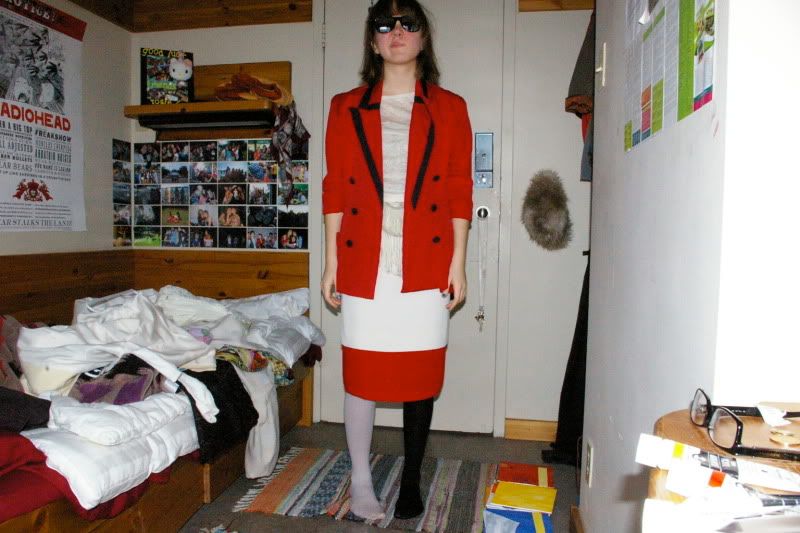
So etcetera etcetera I apologize for the absence, but my reading week just passed (which I spent working both a job and on assignments) and the week before that was a bit busy as well. So not only have I been absent from the blog but I've been pretty behind on all of the fashion weeks as a result. When I say behind I mean so far back I've lost the pack (just finished all of NY and about to start London). So tomorrow I'm going to sit in my school's computer lab and catch up because guess what? PARIS IS STARTING TOMORROW SAY WHUUUT. I'm going to do review posts eventually as well (also I couldn't decide which to do so I requested my Tumblr bbs to suggest some - so far we've got Prada, Missoni, D&G and Marc Jacobs) because I need to brush up on my writing skills (even though I have a 1200 word research essay due on Monday which I should be working on instead). Anywho this is what I wore today (the red skirt irritated me on the way to school so I took it off after only a bit of wear, unfortunately. Gotta remember skin on zipper contact isn't comfortable)

Moreover, what possessed me to make this face? I need to plan facial expressions pre-taking pictures of outfits.


I DO WHAT I WANT. No but actually, this expression needs to get off of my face.

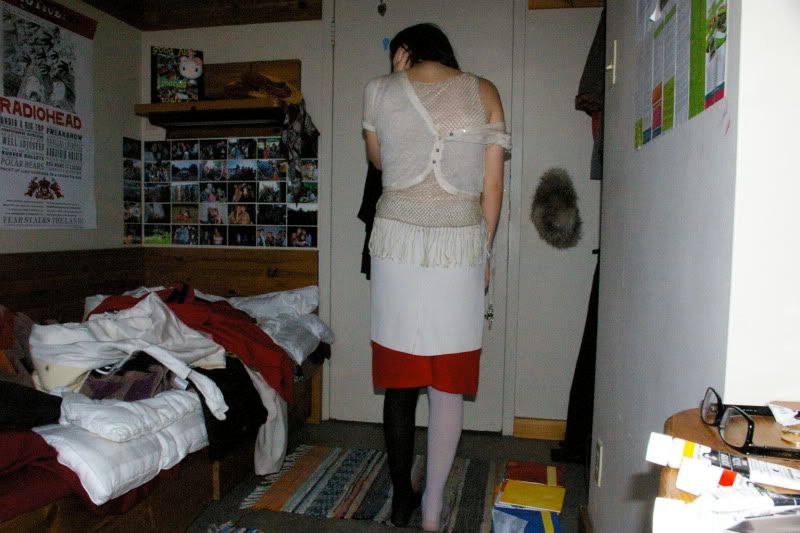
Pale beige cardigan on backwards, H&M. Detailed beige tee and red skirt, vintage. Cream skirt, thrifted. Tights from eBay.
Also, remember the book Radical Fashion I was talking about? It's basically a compilation of essays on what the book describes as 'radical' designers, which is a sentiment I share. So far I've only managed to read the first three essays (I believe there are about five or six?) and the research that has been put into them is astounding. Although the two latter essays I read were concerning facts about the past and present of certain designer's work (for example, the second essay was about Jean Paul Gaultier and Azzedine Alaia's work in couture and the third regarded Yohji, Rei, Issey Miyake and to an extent Junya Watanabe, as they brought to Paris a sense of perfection to what the western considered a degradation of beauty; imperfect) which I already was aware of, the first essay didn't concern so much the designer as it did the role that the Futurist movement played for each designer, both consciously or without conscious influence at all.

The essay itself is entitled 'Looking Forward, Historical Futurism' and it's written in an articulate, quite fluent manner by Judith Clark. I'm not going to delve too deep into discussion of the essay itself because it'll basically lead to a summary from me and I'd rather you guys read it yourselves (don't tl;dr this you guys! It's intriguing I swears). Basically the Futurists were turning their back on timeless, elegant, goddess-like clothing that of course was a radical thing to do.

It's online, you can read it here. But I'm going to post some excerpts I found interesting nevertheless.

The tradition of the dead generations weighs like a nightmare on the minds of the living. And, just when they appear to be engaged in the revolutionary transformation of themselves...in the creation of something that does not yet exist, precisely in such epochs of revolutionary crisis they timidly conjure up the spirits of the past to help them; they borrow their names, slogans and costumes so as to stage the new world-historical scene in this venerable disguise and borrowed language... In the same the beginner who has learned a new language always retranslates it into his mother tongue: he can only be said to have appropriated the spirit of the new language and to express himself in it freely when he can manipulate it without reference to the old, and when he forgets his original language while using the new one.

Futurist clothing had to be aggressive and dynamic (through the use of triangles, spirals, cones, that 'inspire love of danger, speed, hatred of peace and immobility'). It has to be asymmetrical as opposed to classically harmonious (he specifies examples—perhaps a jacket with one sleeve longer than the other or one rounded lapel and the other square.) It had to be agile, simple (easy to put on and remove) and hygienic (for war marches). It had to be joyful and hence its colours had to be vivid (here Balla uses the emphasis typical of Futurist manifestos to describe colour 'Reeeeeeeeeeeds, Viiiiooooooleeeets, greeeeeeens') and fluorescent (an early example of its application to textiles used for everyday dress). It had, vitally, to be reactive, achievable, with modificanti (fabric badges), applied to an outfit both to reflect the wearer's mood and to enhance its impact, using 'war-hungry, decisive' adjectives never before applied to dress. Finally, it had to be disposable, not durable, to ensure fast renewal.

(ironically Balla and I seem to have the same method of emphasis ^^)

Futurists enjoying daring, novelty, originality, even absurdity in its own right, highlighting the obviously associated behavioural dimension of dress. For Futurists both wearer and dress were active.

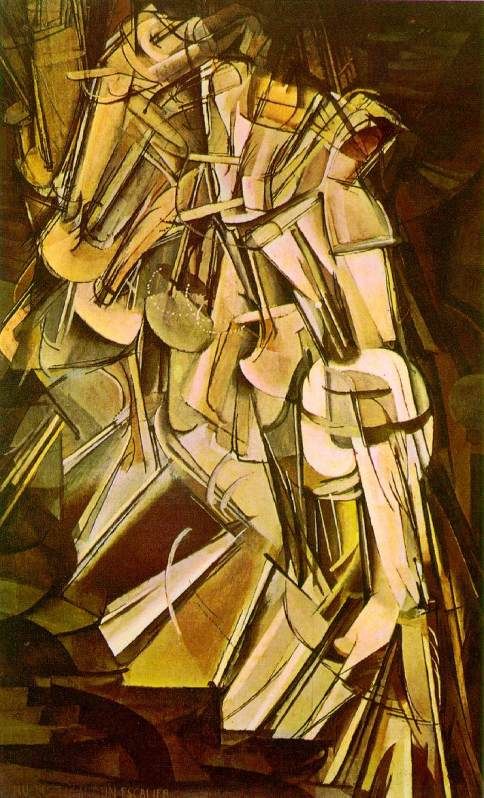
But I think what mainly piqued my interest in Futurism integrated with fashion is how Futurists wanted to translate paintings which completely abstracted the human form into clothing. For an example, take Marcel Duchamp's Nude Descending A Staircase No. 2. I'm not talking prints, structure or color palette; I'm talking the complete translation of bodily form and posture. That is definitely what I would call radical.


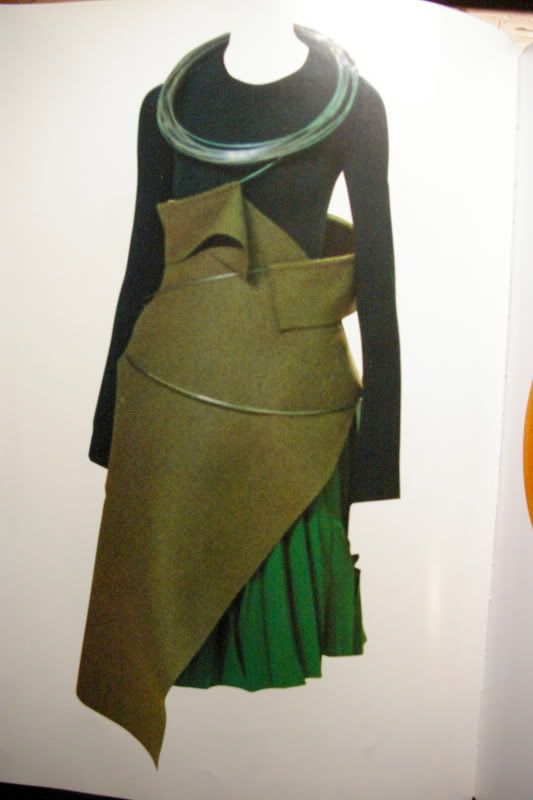
Finally, there were pictures in the latter of the book of collections, advertisements, exhibitions, artwork, you name it, by the designers. I'll start with Gaultier and Alaia, the first of the two essays with focus on designers, then end it with my favourites; Kawakubo, Miyake, Yamamoto and Watanabe. :3 (I'll post the Margiela/Chalayan/McQueen/Westwood ones when I get to the essays)

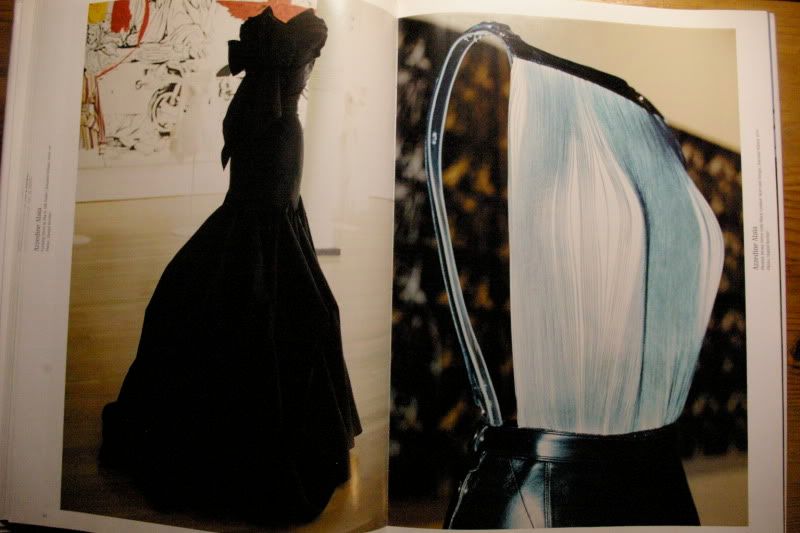
Azzedine Alaia:
left: A/W 2000-01 right: A/W 1979

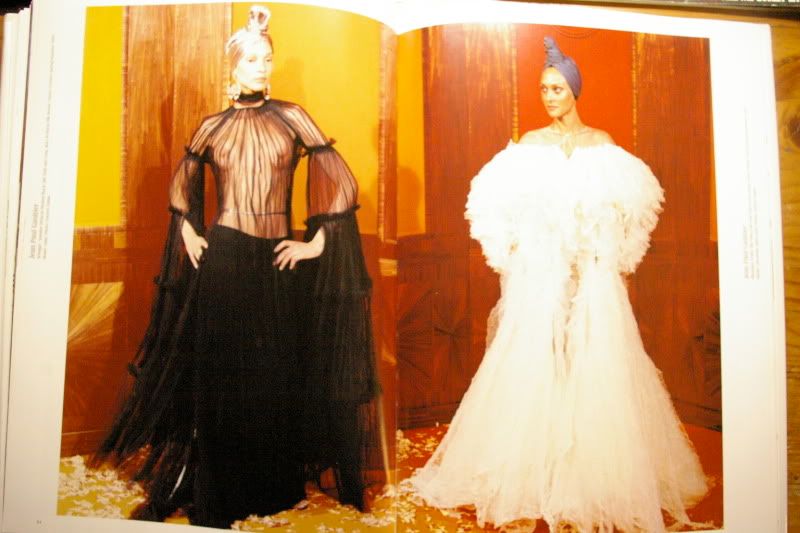
Jean Paul Gaultier:

both from Haute Couture S/S 2000

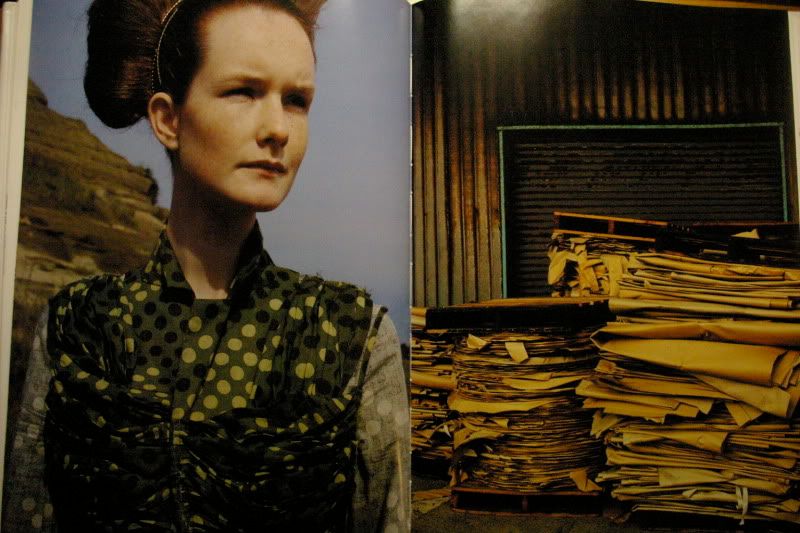
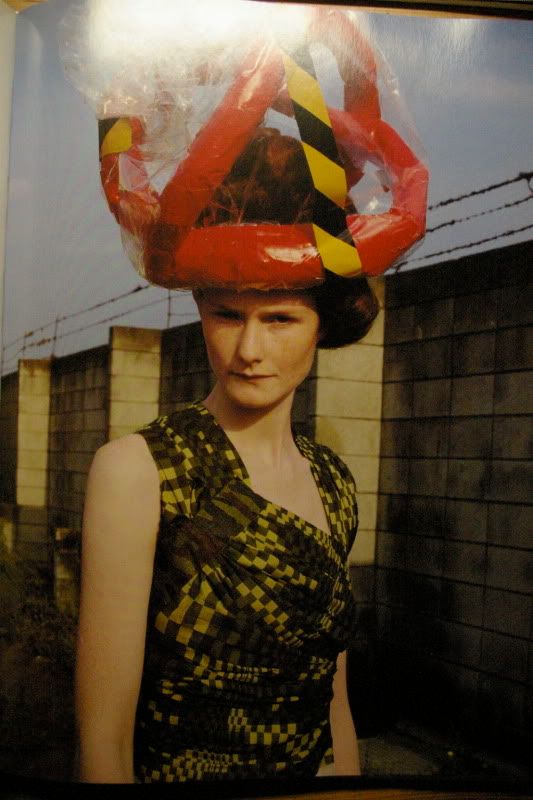
Comme des Garcons:


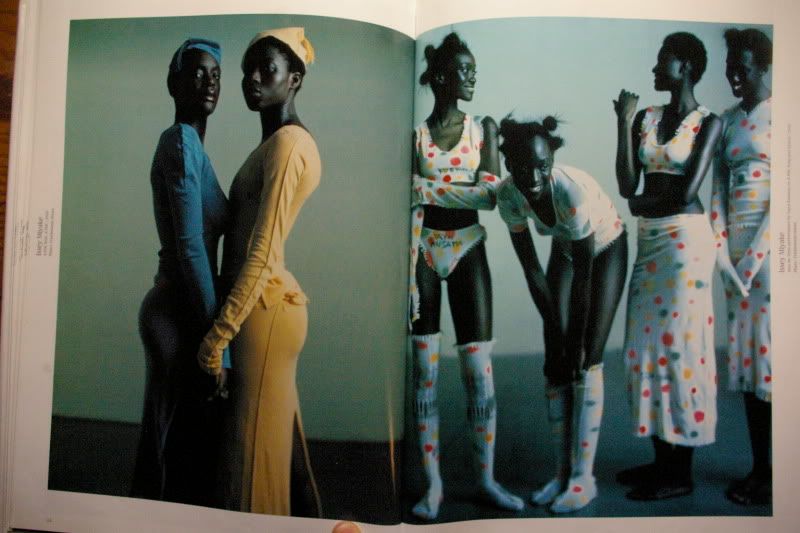
Issey Miyake:
A-POC 1999 (from Issey Miyake Making Things, ACE Gallery, New York, Nov 1999) (I would throw fluffy animals from cliffs to go back and see this, ngl)
l: A-POC Knit 2000 r: Jeux de Tissu performance by Yayoi Kusuma on A-POC King and Queen 2000
A-POC 2001

Junya Watanabe:

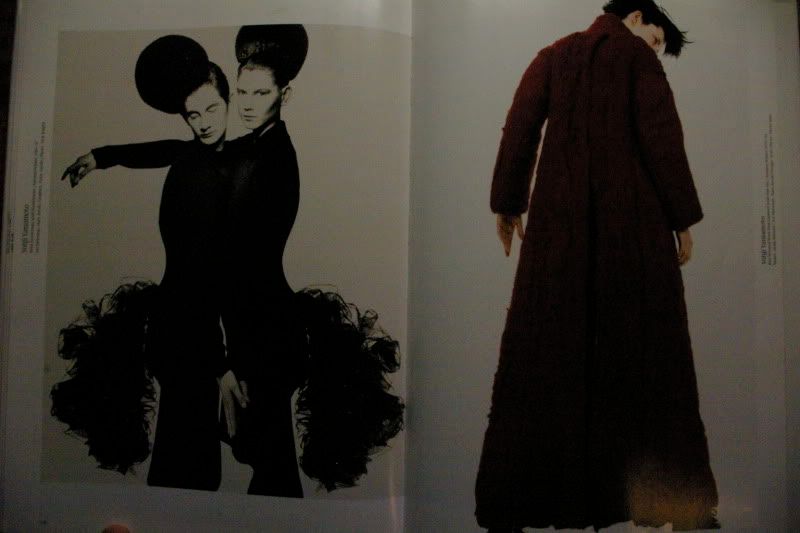
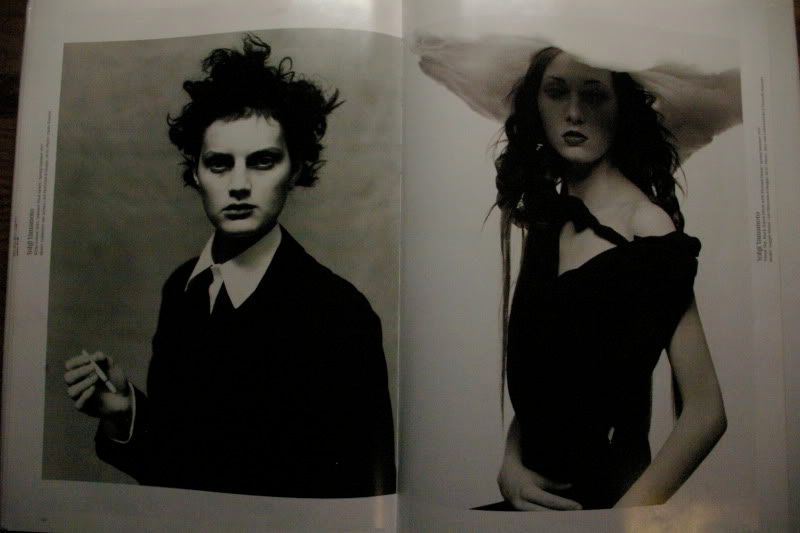
Yohji Yamamoto:
l: A/W 1986-87 r: A/W 1995-96
l: S/S 1997 r: S/S 1998

l: A/W 1995-96 r: S/S 1999